

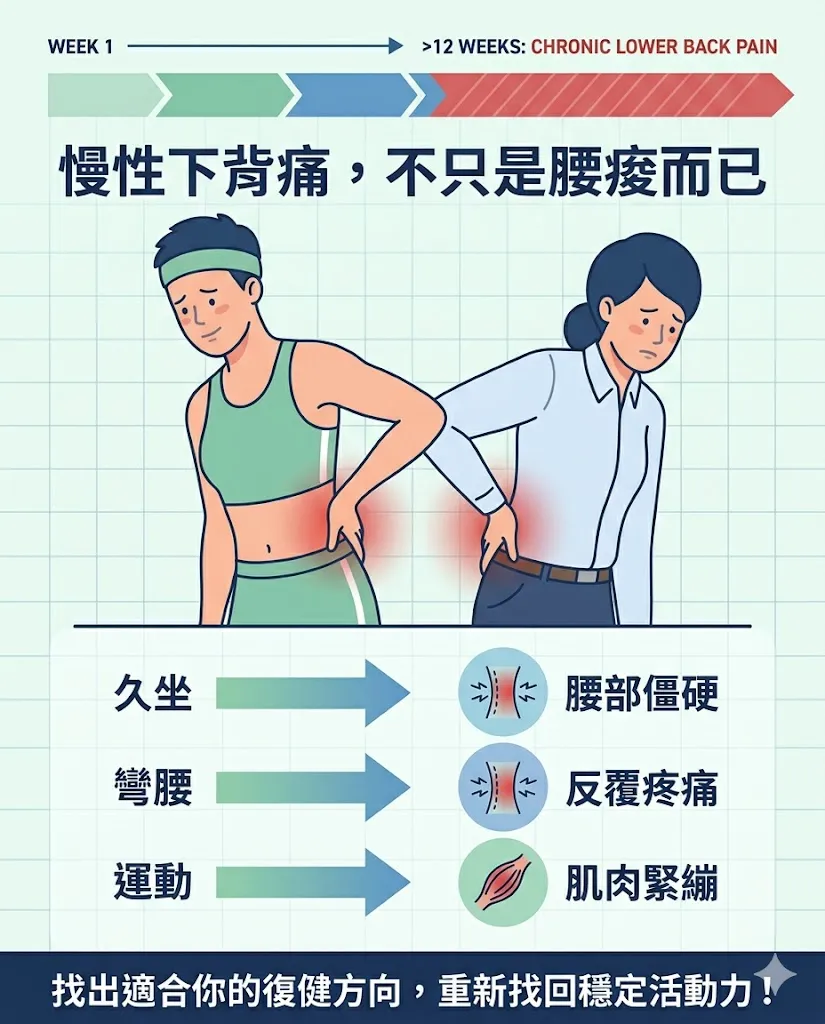
Chronic lower back pain is more than just a sore back

Lower back pain is a common problem for both athletes and office workers.
However, if the pain persists for more than 12 weeks...you may already be experiencing "chronic lower back pain."
Common Symptoms of Discomfort
Common symptoms of chronic lower back pain include:
Stiffness, recurring pain, and muscle tension in the lower back can even make it difficult to sit for long periods, bend over, exercise, and go about daily activities.
Why Does Lower Back Pain Keep Coming Back?

The causes of chronic lower back pain are often not limited to simply “tight lower back muscles”; they may also be related to the following issues:
Insufficient lumbar spine stability
Control of the deep core muscles during descent
Deterioration in coordination and balance between the trunk and lower limbs
When the body lacks sufficient stability and control, the muscles surrounding the lumbar spine are prone to overcompensating, leading to recurring pain.
Exercise therapy is a key factor in improving chronic lower back pain.
When it comes to chronic lower back pain, one of the interventions currently widely regarded as the most effective is Exercise Therapy。
According to a study by Ko et al. published in 2018 in Journal of Physical Therapy Science The study, which focused on patients with chronic lower back pain, 12-Week Lumbar Spine Stabilization Training...which can effectively reduce pain and help restore lost muscle strength around the lumbar spine.
Research Literature:Effects of a 12-Week Program of Lumbar Stabilization Exercises and Sling Exercises on Chronic Low Back Pain

7 Lumbar Stabilization Exercises Studied in the Research
The seven lumbar stabilization exercises used in the study included:
- Sit-ups
- Superman-style
- Dead Bug Pose
- Squats
- Plank
- Side-bar style
- Bridge-type
Recommended Training Methods
The training methods are as follows:
Repeat each movement 10 times for 3 sets
3 days a week for 12 weeks
Through regular training, give your body enough time to rebuild stability, control, and strength.
Assess first, then start training

However, exercise therapy isn't something you should just follow blindly.
Since everyone’s sources of pain, movement patterns, and physical condition are different, the appropriate training intensity and exercises will also vary.
A thorough assessment is the starting point of exercise therapy.
Find the Right Rehabilitation Approach for You
If you're unsure whether you're performing the exercises correctly, or if you'd like to know whether your current lower back pain makes these exercises appropriate for you, please feel free to schedule a professional evaluation.
Let’s work together to find the rehabilitation plan that’s best for you, gradually alleviate your lower back pain, and help you regain stability, mobility, and quality of life.